


3 mistakes that hold back frozen dessert sales (and how to avoid them)

In the frozen aisle, it happens all the time: a dessert is listed with high expectations, but after a few months it gets replaced.
It’s not necessarily a quality issue.
More often, it’s a positioning issue.
There are recurring dynamics that slow down product rotation and make an item less effective than it could be. Identifying them allows you to take concrete action—without having to start from scratch.
Mistake 1: Good products, but no identity
Many frozen desserts are excellent in every respect: balanced recipes, quality ingredients, solid technical execution.
The problem is that, once on the shelf, they don’t stand out and end up blending in with competitors. Familiar flavors, similar packaging, nothing that helps quickly explain why a shopper should choose that specific product. To the consumer, they all look the same—and the choice often becomes automatic or price-driven.
This means that even an outstanding product can sit still on the shelf if it lacks personality or visual distinctiveness. Perception is everything: a dessert that clearly communicates its value is far more likely to be chosen, repurchased, and become a category staple.
How to avoid it
Clarity is key. A dessert should immediately communicate what it offers: flavor, format, and consumption occasion. There’s no need to complicate the message—what matters is making the product’s unique value obvious and creating an immediate point of differentiation.
Mistake 2: Format disconnected from real consumption
Format is not just a technical detail—it’s a true sales driver. Choosing the wrong format can make a product difficult to sell, even if it tastes great.
A single-serve suggests convenience and speed, making it ideal for individual consumption. A larger format, on the other hand, evokes sharing and special occasions, such as parties or family dinners. When this alignment is missing, the product struggles and is often overlooked.
How to avoid it
Always start from real usage: who is buying it, when it’s consumed, and on what occasion. The right format is the one that answers these questions without friction, making the choice feel natural and improving product rotation.
Mistake 3: An unclear or hard-to-read range
You don’t need a huge number of products—what really matters is having a range that is clear and well structured. If desserts on the shelf don’t have defined roles or easily recognizable flavors, consumers may hesitate or turn to a more familiar alternative.
A practical example: even just 4–5 SKUs can feel confusing if flavors are too similar or if the packaging doesn’t clearly communicate differences and usage occasions. A well-organized range helps customers quickly understand what to choose and increases the likelihood of purchase and repurchase.
How to avoid it
-
Assign a clear role to each dessert within the range
-
Highlight flavors and consumption occasions clearly
- Avoid overlap between similar products
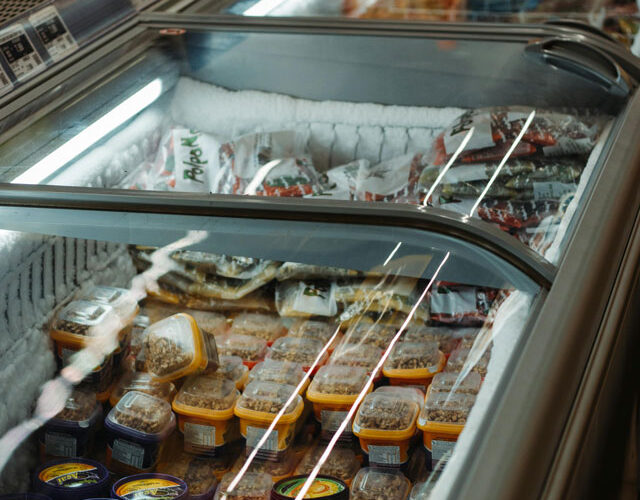 When a frozen dessert doesn’t perform, it’s rarely by chance.
Most of the time, it’s the result of misaligned choices: an unclear identity, a format that doesn’t match real consumption, or a range that’s difficult to navigate.
Working on these aspects allows you to improve performance without changing the product itself—simply by making it clearer, more relevant, and better suited to its context.
At Dolceria Alba, we develop frozen desserts starting from exactly this approach: not just quality, but clarity, consistency, and real effectiveness at the point of sale and in food service. We work closely with retail partners to build tailored ranges adapted to different markets and consumption needs—combining production expertise with a strategic category vision.